


And What They Reveal About Canine Health
Caring for our dogs’ health can feel confusing, emotional, and at times overwhelming. Many of the questions we receive in our email inbox each week reflect not just symptoms, but worry, responsibility, and a deep desire to make the right decisions. Interestingly, the same themes arise repeatedly, such as skin flare-ups, gut issues, fatty lumps, joint pain, and supplement safety. These recurring questions tell a story about what matters most to dog owners: comfort, clarity, and long-term wellbeing.
Below are among the most common questions we hear, and what they reveal about canine health.
-
‘My dog is itchy - where do I start?’
Dogs present with red paws, recurrent ear infections, hot spots, belly rashes, or constant scratching. Many owners have already tried medicated shampoos, oral medications, diet swaps, and topical creams. Owners are often exhausted by the cycle.
Canine atopic dermatitis (CAD) is one of the most common inflammatory skin conditions in dogs and is driven by a complex interplay between immune dysregulation, gut and skin barrier dysfunction and environmental triggers. Emerging evidence shows that both the skin and gut function as immune organs, with disruption to the gut–skin axis contributing to chronic itch, inflammation and barrier impairment. Nutritional strategies that reduce inflammatory load, support microbial balance and strengthen epithelial barrier integrity are therefore central to long-term management rather than short-term suppression.
In practice, this is why our go-to starting point for itchy dogs is the Allergy Support Bundle, which combines P.E.A Plus, Gut Restore and Pure Colostrum. Together, these ingredients work on multiple levels - modulating mast-cell activation and inflammatory signalling, restoring gut barrier integrity, and supporting immune balance - providing a layered, systems-based approach rather than targeting symptoms in isolation.
Yeast overgrowth is another common factor among itchy dogs. Dogs licking paws or developing recurrent ear infections often benefit from targeted probiotic yeast support such as Pure SB (Saccharomyces boulardii), which has demonstrated antimicrobial and immune-modulating properties in veterinary literature.
When owners ask about itch, they’re often ready to move beyond suppression of symptoms toward addressing the root cause.
-
‘Why does my dog keep having gut issues?’
Loose stools. Mucus. Diarrhoea after antibiotics. Morning bile vomiting. Reflux. These concerns arise weekly.
The pattern is familiar: a dog is treated with antibiotics for one issue, and the gut becomes unstable. Or a sensitive dog cycles through soft stools every few weeks. Bloodwork may appear normal, yet symptoms persist.
The gastrointestinal tract is highly sensitive to stress, dietary shifts, medication, and microbial imbalance. Antibiotics, while sometimes necessary, significantly disrupt microbial diversity. Studies show that antibiotic-associated dysbiosis can persist for weeks to months.
When the microbiome shifts, several downstream effects can occur:
- Increased intestinal permeability
- Altered short-chain fatty acid production
- Increased protein putrefaction
- Heightened immune activation
This is why post-antibiotic gut support is so critical. Soothing nutrients such as slippery elm, L-glutamine, and deglycyrrhizinated (DGL) licorice support mucosal repair. Probiotic yeasts such as SB help regulate pathogenic bacteria, reduce antibiotic-associated diarrhoea, and restore microbial balance during and immediately after antibiotic therapy.
We typically recommend starting with Pure SB during antibiotic use, followed by a more comprehensive gut-repair formula such as Gut Restore to support mucosal healing and microbiome stability. This layered approach helps stabilise stools quickly while addressing the underlying disruption.
For long-term maintenance of gut health, we’d suggest Gut Protect. Soluble fibres like psyllium and prebiotic fibres such as inulin and larch arabinogalactan further assist by rebalancing microbial fermentation and supporting barrier integrity.
-
‘Do you have any products for lipomas?’
For benign, fatty lumps (lipomas), our primary recommendation would be Pure Milk Thistle (Silybum marianum).
Lipomas are more commonly observed in middle-aged to older and overweight dogs. Although the exact cause of lipomas is unknown, it is understood that fat metabolism and storage are closely regulated by systemic metabolic and liver processes, indicating that age-related metabolic changes may influence lipoma development. By improving bile flow, reducing oxidative stress, and supporting liver cell regeneration, Milk Thistle may help slow the progression of fatty lumps and support overall metabolic health. While it won't dissolve a lipoma, it can help address some of the underlying drivers that contribute to its development.
Additionally, Pure Turkey Tail (Trametes versicolor) is also very well indicated in this instance. While again, it's unlikely to dissolve any lumps, it may help indirectly, by supporting the biological processes that influence how and why these lumps develop and progress over time. Turkey Tail contains beta-glucans and polysaccharopeptides that improve immune surveillance, help regulate over- or under-active immune responses, and support healthy cell signalling. As dogs age, immune regulation becomes less precise. So, supporting immune balance may help the body better manage abnormal tissue changes rather than allowing unchecked growth.
-
‘What can I give my dog for arthritis?’
Arthritis is more than simple ‘wear and tear’. It involves cartilage breakdown, inflammation, reduced joint fluid quality, muscle loss, and pain sensitisation. Because of this, layered joint support tends to work best. Rather than relying on a single ingredient, addressing structure, inflammation, and pain simultaneously provides more comprehensive results: As such, we recommend:
- Collagen Forte: Bioactive collagen peptides (Fortigel®) support cartilage repair and joint structure by stimulating cartilage matrix production and strengthening tendons and ligaments.
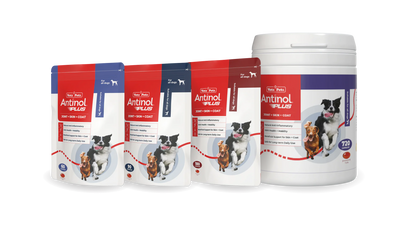
- Antinol® Plus: This product targets inflammation using highly bioavailable marine lipids that help regulate inflammatory pathways and improve mobility.
- P.E.A Plus: Palmitoylethanolamide (P.E.A) assists with pain modulation and chronic inflammation by acting on the endocannabinoid system, helping reduce discomfort and neuroinflammation.
- VetActiv8® Joint Health Plus: This is a multi-nutrient blend of rosehips, curcumin, MSM, type II collagen, and hyaluronic acid, targeting multiple pathways involved in joint health, including inflammation reduction, cartilage repair, and lubrication.
These products can be used together, as each supports a different aspect of joint health. For mild stiffness, one or two may be sufficient. For moderate to advanced arthritis, combining them often provides the most meaningful improvement over time, with consistency being key for lasting results.
-
Can I give multiple supplements together?
Owners frequently ask:
- Can I combine these products?
- How long until I see results?
- Is this safe long-term?
In most cases, our supplements can be safely combined because each works through a different mechanism. Some support inflammation regulation, others help maintain healthy immune balance, others assist joint structure and connective tissue repair, and some focus on restoring microbial balance and gut barrier integrity.
Most nutraceuticals require consistency rather than high doses. Many show meaningful improvement within 2–4 weeks, but some chronic conditions may take 8–12 weeks to stabilise.
Unlike pharmaceuticals, most of these compounds do not create tolerance or dependency, and long-term use is often appropriate when supporting chronic inflammatory or degenerative conditions.
That said, we recommend contacting us if your dog is on medications or is managing a complex health condition, as there are some instances where it may be inappropriate to give a supplement in combination with medications.
What these questions really tell us
The most common questions we receive are not really about products, but about helping dogs feel better and understanding what is happening beneath the surface. More owners are looking beyond quick fixes, wanting to support long-term health and make informed decisions about their dog’s care.
References (click to expand)
Bajwa, J. (2017). Canine Malassezia dermatitis. Can Vet J., 58(10), 1119–1121. PMID: 28966366.
Benson, K. F., Stamets, P., Davis, R., Nally, R., Taylor, A., Slater, S., & Jensen, G. S. (2019). The mycelium of the Trametes versicolor (Turkey tail) mushroom and its fermented substrate each show potent and complementary immune activating properties in vitro. BMC Complementary and Alternative Medicine, 19(1), 1–14. https://doi.org/10.1186/s12906-019-2681-7
Butawan, M., Benjamin, R. L., & Bloomer, R. J. (2017). Methylsulfonylmethane: applications and safety of a novel dietary supplement. Nutrients, 9(3), 290. https://doi.org/10.3390/nu9030290
Christensen, R., Bartels, E. M., Altman, R. D., Astrup, A., & Bliddal, H. (2008). Does the hip powder of Rosa canina (rosehip) reduce pain in osteoarthritis patients?–a meta-analysis of randomized controlled trials. Osteoarthritis and Cartilage, 16(9), 965–972. https://doi.org/10.1016/j.joca.2008.03.001
Della Rocca, G., & Gamba, D. (2021). Chronic pain in dogs and cats: is there place for dietary intervention with micro-palmitoylethanolamide? Animals, 11(4), 952. https://doi.org/10.3390/ani11040952
Drechsler, Y., Dong, C., Clark, D. E., & Kaur, G. (2024). Canine atopic dermatitis: prevalence, impact, and management strategies. Veterinary Medicine: Research and Reports, 15–29. https://doi.org/10.2147/VMRR.S412570
Eckert, T., Jährling-Butkus, M., Louton, H., Burg-Roderfeld, M., Zhang, R., Zhang, N., ... & Siebert, H. C. (2021). Efficacy of chondroprotective food supplements based on collagen hydrolysate and compounds isolated from marine organisms. Marine Drugs, 19(10), 542. https://doi.org/10.3390/md19100542
Gencoglu, H., Orhan, C., Sahin, E., & Sahin, K. (2020). Undenatured type II collagen (UC-II) in joint health and disease: a review on the current knowledge of companion animals. Animals, 10(4), 697. https://doi.org/10.3390/ani10040697
Kim, H., Chae, Y., Cho, J. H., Song, M., Kwak, J., Doo, H., ... & Kim, H. B. (2025). Understanding the diversity and roles of the canine gut microbiome. Journal of Animal Science and Biotechnology, 16(1), 95. https://doi.org/10.1186/s40104-025-01235-4
Kępińska-Pacelik, J., & Biel, W. (2023). Turmeric and curcumin—health-promoting properties in humans versus dogs. International Journal of Molecular Sciences, 24(19), 14561. https://doi.org/10.3390/ijms241914561
Kunyeit, L., KA, A. A., & Rao, R. P. (2020). Application of probiotic yeasts on Candida species associated infection. Journal of Fungi, 6(4), 189. https://doi.org/10.3390/jof6040189
Mosley, C., Edwards, T., Romano, L., Truchetti, G., Dunbar, L., Schiller, T., ... & Troncy, E. (2022). Proposed Canadian consensus guidelines on osteoarthritis treatment based on OA-COAST stages 1–4. Frontiers in Veterinary Science, 9, 830098. https://doi.org/10.3389/fvets.2022.830098
O’Neill, D. G., Corah, C. H., Church, D. B., Brodbelt, D. C., & Rutherford, L. (2018). Lipoma in dogs under primary veterinary care in the UK: prevalence and breed associations. Canine Genetics and Epidemiology, 5(1), 9. https://doi.org/10.1186/s40575-018-0065-9
Pais, P., Almeida, V., Yılmaz, M., & Teixeira, M. C. (2020). Saccharomyces boulardii: what makes it tick as successful probiotic? Journal of Fungi, 6(2), 78. http://dx.doi.org/10.3390/jof6020078
Pereira, M., Valério-Bolas, A., Saraiva-Marques, C., Alexandre-Pires, G., Pereira da Fonseca, I., & Santos-Gomes, G. (2019). Development of dog immune system: from in uterus to elderly. Veterinary Sciences, 6(4), 83. https://doi.org/10.3390/vetsci6040083
Soontornvipart, K., & Mongkhon, N. (2012). Effect of PCSO-524 Polyunsaturated Fatty Acid Compound (Antinol) on Osteoarthritis Biomarker (WF6) in Dogs. Board of Reviewing Editors, 18, 23. https://www.cabidigitallibrary.org/doi/pdf/10.5555/20123212609?utm_source=chatgpt.com%23page=21#page=21
Serra Aguado, C. I., Ramos-Plá, J. J., Soler, C., Segarra, S., Moratalla, V., & Redondo, J. I. (2021). Effects of oral hyaluronic acid administration in dogs following tibial tuberosity advancement surgery for cranial cruciate ligament injury. Animals, 11(5), 1264. https://doi.org/10.3390/ani11051264
Zhao, Y., Yu, C., Zhang, J., Yao, Q., Zhu, X., & Zhou, X. (2025). The gut-skin axis: Emerging insights in understanding and treating skin diseases through gut microbiome modulation. International Journal of Molecular Medicine, 56(6), 210. https://doi.org/10.3892/ijmm.2025.5651

