


The festive season is a time of celebration: family gatherings, long lunches, bright lights, and the joyful chaos of visitors coming and going. But while the holidays bring excitement for us, they can often bring stress and overstimulation for our dogs. Routines shift, energy levels in the home rise, and our own stress about preparations or travel tends to spill over to them.
Dogs are highly attuned to our emotional state. They don't just read our tone of voice or body language - they feel our stress. And when that stress builds, it can have real, physical consequences for them. From digestive upset and inflammation to skin flare-ups, restlessness, or behavioural changes, the festive season can test even the most balanced dog's resilience.

The Stress-Immune-Gut Axis: Why It Matters
When stress occurs, whether it's from loud noises, disrupted routines, or simply picking up on our own tension, the body releases stress hormones like cortisol and adrenaline. In small bursts, these hormones are helpful, preparing the body for action. But when stress is ongoing, it disrupts the balance of the gut-brain axis, the vital communication link between the digestive, nervous, and immune systems.
Prolonged stress can:
- Increase intestinal permeability (i.e., 'leaky gut'), allowing inflammatory compounds to enter the bloodstream.
- Disrupt beneficial gut bacteria, weakening digestion and immunity.
- Heighten inflammatory signalling, leading to flare-ups in allergies, itchy skin, or joint pain.
Essentially, stress doesn't stay in the mind - it travels through the entire body, fuelling inflammation and immune dysregulation. That's why you might notice your dog's tummy troubles, scratching, or hot spots worsening around busy or stressful times.
Do Dogs Really Absorb Their Owners' Stress?
Science now backs what dog owners have always sensed: dogs are emotional mirrors of their humans. A 2019 study from Sweden's Linköping University found that dogs' cortisol levels rise and fall in sync with their owners', showing that they genuinely share our stress chemistry.
When we're rushing between social commitments, cooking, or feeling overwhelmed by family logistics, our dogs can absorb that tension. Sensitive dogs might become clingy or unsettled, while others might display stress through pacing, panting, changes in appetite, or even digestive upsets.
During the festive season, our homes are full of sensory triggers, such as decorations, guests, food smells, fireworks, and disrupted routines, and while we see them as joyful, many dogs experience them as unpredictable and overwhelming.

How Can You Protect Your Dog's Gut, Mind, and Immune System During the Holidays?
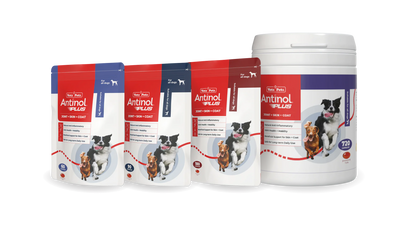
Fortunately, there are gentle ways to help your dog stay balanced and comfortable through the holidays, supporting their gut and immune health, and promoting emotional resilience:
- Calming herbs: Herbs such as Bacopa (Bacopa monnieri), Ashwagandha (Withania somnifera), Passionflower (Passiflora incarnata), Skullcap (Scutellaria lateriflora), Rhodiola (Rhodiola rosea), and Californian poppy (Eschscholzia californica) nourish the nervous system and regulate stress hormones, helping your dog maintain calm and emotional balance during times of change or excitement.
- Plant-based terpenes: Compounds such as linalool (from lavender) work to soothe stress and anxiety, promoting calm without sedation. Plant-based terpenes are perfect for situations like gatherings, travel, or fireworks.
- Gut support: Ingredients such as psyllium husks, inulin, larch arabinogalactan, DigeZyme®, Lactospore®, Chamomile (Matricaria chamomilla) and Fennel (Foeniculum vulgare) support the gut-brain connection by maintaining digestive stability, reducing inflammation, and keeping the gut barrier strong. A healthy gut microbiome is critical for immune regulation and emotional wellbeing.
- Saccharomyces boulardii: A beneficial probiotic yeast that helps stabilise gut flora during stress, reducing loose stools or bloating caused by changes in diet or routine.
- Medicinal mushrooms: Powerful, immune-modulating mushrooms, such as Reishi (Ganoderma lucidum), Shiitake (Lentinula edodes), Maitake (Grifola frondosa), Cordyceps (Cordyceps sinensis), and Turkey Tail (Trametes versicolor), help to promote resilience, energy, and recovery from both emotional and physical stress.
Together, these ingredients help keep your dog's gut calm, immune system balanced, and stress response regulated, the key foundations of overall health.

A Shared Calm: How Our Stress Shapes Theirs
One of the most powerful things you can do for your dog's health this season doesn't come from a supplement at all - it comes from you. Your dog's sense of safety and calm is largely guided by your own emotional state.
Simple moments of connection, such as a slow walk, quiet time together, gentle touch, or even just breathing deeply beside them, can help regulate both of your nervous systems. Try to protect their routine wherever possible: keep mealtimes consistent, ensure they have a quiet 'safe space' away from the noise, and resist the temptation to overindulge them with rich festive foods.
As much as the holidays are about joy and togetherness, they can also be an opportunity to slow down and reconnect, not just with family and friends, but with the dogs who quietly feel every heartbeat of our world.
So this Christmas, remember: supporting your dog's gut and stress response isn't just about preventing tummy upsets or itchy skin. It's about helping them (and you) feel balanced, grounded, and well through the season of celebration.

Why Is Supporting Your Dog's Emotional Health Essential During the Festive Season?
When we care for our dogs' emotional health, we care for their physical health too. A calmer home, a steady routine, and the right gut, stress, and immune support can make all the difference in keeping them healthy and happy, both during the holidays and long after the decorations come down.
References (click to expand)
Adibpour, N., Hosseininezhad, M., Pahlevanlo, A., & Hussain, M. A. (2019). A review on Bacillus coagulans as a spore-forming probiotic. Applied Food Biotechnology, 6(2), 91-100. https://doi.org/10.22037/afb.v6i2.23958
Ağan, U. B., Raouf, S. H., Uzun, B., & Meral, Y. (2022). The Hidden Potential of Herbal Remedies and Neutraceuticals in Canine and Feline Behavioural Disorders. Van Veterinary Journal, 33(1), 36-41. https://doi.org/10.36483/vanvetj.955081
Alex, G. S., Ogbe, M. A., & Memudu, A. E. (2025). Introducing the Best Medicinal Mushrooms for Brain Health. In Medicinal Mushrooms: An Emerging Superfood for Brain Health (pp. 51-76). Springer Nature Singapore. https://doi.org/10.1007/978-981-95-2774-8_3
Albuquerque, N., Guo, K., Wilkinson, A., Savalli, C., Otta, E., & Mills, D. (2016). Dogs recognize dog and human emotions. Biology Letters, 12(1), 20150883. http://dx.doi.org/10.1098/rsbl.2015.0883
Alves, J. C., Santos, A., Jorge, P., & Pitães, A. (2021). The use of soluble fibre for the management of chronic idiopathic large-bowel diarrhoea in police working dogs. BMC Veterinary Research, 17, 1-5. https://doi.org/10.1186/s12917-021-02809-w
Animal Emergency Service. (2023, December 24). Understanding the risks of festive season gatherings for dogs. https://animalemergencyservice.com.au/blog/understanding-the-risks-of-festive-season-gatherings-for-dogs/
Berschneider, H. M. (2002). Complementary and alternative veterinary medicine and gastrointestinal disease. Clinical Techniques in Small Animal Practice, 17(1), 19-24. https://doi.org/10.1053/svms.2002.30224
Brock, C. (2012). American skullcap (Scutellaria lateriflora L): A study of its effects on mood in healthy volunteers (Doctoral dissertation, University of Westminster). https://doi.org/10.34737/8z40y
Gopalakrishnan, N. K., Pappuswamy, M., Meganathan, G., Shanmugam, S., Pushparaj, K., Balasubramanian, B., & Kim, I. H. (2025). Influence of Probiotic Administration in Canine Feed: A Comprehensive Review. Veterinary Sciences, 12(5), 449. https://doi.org/10.3390/vetsci12050449
Haverbeke, A., Uccheddu, S., Reinert, C., Tertemiz, S., Arnouts, H., & Sannen, A. (2024). Dose-dependent responses: A preliminary investigation into the olfactory effects of essential oil concentrations on canine behavior. Veterinary Research Communications, 48(5), 3387-3396. https://doi.org/10.1007/s11259-024-10466-1
Hobbs, C. (2000). Medicinal value of Lentinus edodes (Berk.) Sing. (Agaricomycetideae). A literature review. International Journal of Medicinal Mushrooms, 2(4). https://doi.org/10.1615/IntJMedMushr.v2.i4.90
Katayama, M., Kubo, T., Yamakawa, T., Fujiwara, K., Nomoto, K., Ikeda, K., ... & Kikusui, T. (2019). Emotional contagion from humans to dogs is facilitated by duration of ownership. Frontiers in Psychology, 10, 1678. https://doi.org/10.3389/fpsyg.2019.01678
Kępińska-Pacelik, J., & Biel, W. (2025). Herbal Support for the Nervous System: The Impact of Adaptogens in Humans and Dogs. Applied Sciences, 15(10), 5402. https://doi.org/10.3390/app15105402
Kiełbik, P., & Witkowska-Piłaszewicz, O. (2024). The relationship between canine behavioral disorders and gut microbiome and future therapeutic perspectives. Animals, 14(14), 2048. https://doi.org/10.3390/ani14142048
Lee, A. H. (2022). Effects of probiotics, prebiotics and dietary fibers on the gastrointestinal health and immune indices of adult dogs and cats (Doctoral dissertation, University of Illinois at Urbana-Champaign). https://hdl.handle.net/2142/115690
Moreno, A. A., Parker, V. J., Winston, J. A., & Rudinsky, A. J. (2022). Dietary fiber aids in the management of canine and feline gastrointestinal disease. Journal of the American Veterinary Medical Association, 260(S3), S33-S45. https://doi.org/10.2460/javma.22.08.0351
Rolland, A., Fleurentin, J., Lanhers, M. C., Younos, C., Misslin, R., Mortier, F., & Pelt, J. M. (1991). Behavioural effects of the American traditional plant Eschscholzia californica: Sedative and anxiolytic properties. Planta Medica, 57(03), 212-216. https://doi.org/10.1055/s-2006-960076
Samal, L., Chaturvedi, V. B., Saxena, S., & Pattanaik, A. K. (2012). Jerusalem artichoke as a potential prebiotic: Influence on nutrient utilization, hindgut fermentation and immune response of Labrador dogs. Animal Nutrition and Feed Technology, 12(3), 343-352. https://www.researchgate.net/.../Jerusalem-Artichoke-as-a-Potential-Prebiotic.pdf
Sundman, A. S., Van Poucke, E., Svensson Holm, A. C., Faresjö, Å., Theodorsson, E., Jensen, P., & Roth, L. S. (2019). Long-term stress levels are synchronized in dogs and their owners. Scientific Reports, 9(1), 7391. https://doi.org/10.1038/s41598-019-43851-x
Twomey, L. N., Pluske, J. R., Rowe, J. B., Choct, M., Brown, W., McConnell, M. F., & Pethick, D. W. (2003). The effects of increasing levels of soluble non-starch polysaccharides and inclusion of feed enzymes in dog diets on faecal quality and digestibility. Animal Feed Science and Technology, 108(1-4), 71-82. https://doi.org/10.1016/S0377-8401(03)00161-5

